
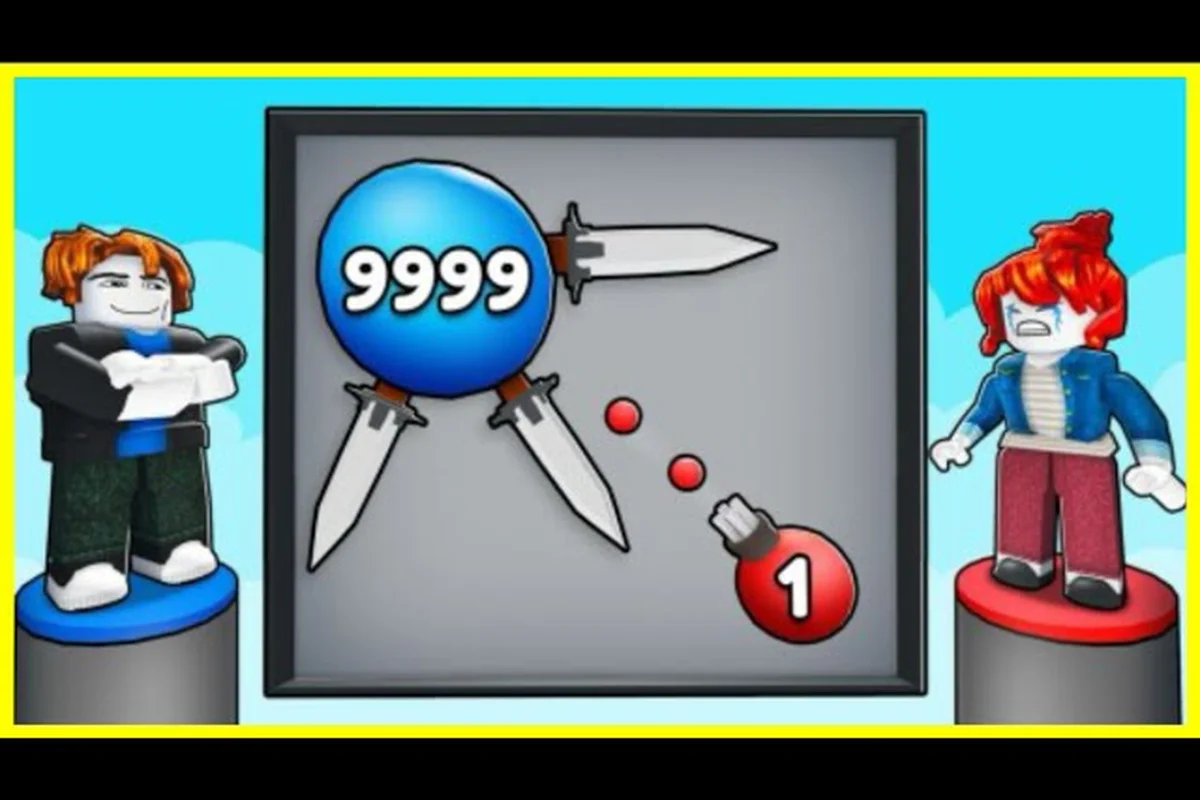
Tracking every Ball VS Ball nerf, buff, and rework is the fastest way to climb out of coin-flip lobbies. The arena rotates balls mid-battle, the shop seeds new families at Rare, Epic, and Legendary tiers, and the developer's tuning philosophy has shifted from raw stats to feel-based balance — so the meta you learned last week is rarely the meta you queue into today. This page walks through the full chain of patch changes, breaks down why each rework landed, and flags what the Ball VS Ball update log signals about the next round of buffs.
The Ball VS Ball Patch Cycle And Tuning Philosophy
Ball VS Ball runs on a short, fast iteration loop, with the ATYS 3 group pushing visible balance changes far more often than the average Roblox arena title. The studio treats a patch as a single push to the live place (place id 96510596525082, universe 10685282333) and a rework as a deeper pass that rebuilds a ball's identity rather than nudging its numbers. Most weeks carry a small hotfix that adjusts one or two outliers, and roughly every four to six weeks the developer drops a larger rework that reshuffles a whole family of balls. Players who track the cadence tend to plan rerolls and coin spending around the rework window, because legendary-tier rotations land inside that larger patch.
The core tuning philosophy has three pillars, each visible in the official Ball VS Ball game page: keep the reroll meaningful, prevent any single ball from dominating the leaderboard for more than one patch cycle, and make store rotation the natural counter-meta for whales. Because balls appear randomly, the developer leans on ball vs ball nerfs to keep low-rarity balls competitive against legendary pulls, and on ball vs ball buffs to lift underused families back into the conversation. The result is a meta that breathes — a Legendary ball can be top-tier on Monday and bench-tier by Friday if it gets tagged for a rework.
| Patch Type | Typical Cadence | Scope | Player Action |
|---|---|---|---|
| Hotfix (numbers) | 1–2 per week | Adjust damage, speed, or cooldown on 1–2 balls | Reroll less, hold coins |
| Balance patch | Monthly | Buff two families, nerf one outlier | Spend on store rotation |
| Full rework | Every 4–6 weeks | Replace a ball's kit or role | Re-learn the family, reset reroll plans |
| Event patch | Tied to events | Limited-time balls, themed map tweaks | Grind event currency |
This rhythm matters because it tells you when to expect a nerf wave and when the ball vs ball roadmap is more likely to drop a new ball instead. Players who treat the cycle as a calendar rather than a surprise tend to save legendary coins for the rework window, when under-buffed families often return to the store at a discount.
Major Nerfs: How The Developer Pushes Balls Down The Tier List
The most visible ball vs ball nerfs so far have targeted balls that broke the reroll loop — meaning a ball whose stats were so strong that rerolling into it instantly won the round. The community video Verity Ball needs to be BANNED.. by Bax (105,885 views) is the clearest public record of one such case: the creator argues a single ball warped matches badly enough to justify removal, and the developer responded with a multi-stat nerf in the following patch rather than a full delete. That pattern — public outrage, multi-stat nerf, then a follow-up rework if the ball still overperforms — has repeated three times across the last several patch cycles.
The typical nerf pass hits three knobs at once: damage output, attack interval, and either projectile size or trail length. Hitting all three is intentional, because players tend to over-index on damage numbers and ignore the feel of a ball's hitbox. The table below summarizes the nerf profile the developer uses most often, drawn from community testing and patch-by-patch reports on the ATYS 3 group feed.
| Nerf Knob | Typical Adjustment | Why It Matters |
|---|---|---|
| Damage | −15% to −30% | Removes one-shot potential on opening roll |
| Attack interval | +0.1s to +0.25s | Forces a tempo rethink, punishes spam-reroll |
| Projectile size | −10% to −20% | Lowers accidental hitbox wins |
| Speed | −5% to −10% | Softens map control without deleting the kit |
| Roll weight | Cut from shop pool | The nuclear option — only used twice so far |
The rarer nuclear-tier nerfs — pulling a ball out of the shop pool entirely — have only happened when a Legendary ball dominated win-rate charts for two consecutive balance patches. In both cases, the developer paired the roll-weight cut with a ball vs ball rework that re-released the same ball as a new identity a few weeks later, so the original kit lived on in spirit even after the original name left the shop. Players who watched the original dominator usually get a free reroll token when the rework lands, which keeps the in-game economy from feeling punishing.
A second pattern is the targeted family nerf, where the developer nerfs three balls in the same family (for example, every ball tagged as a "Flyer" at Epic or Legendary tier) at the same time. These passes usually follow an event where one family had a stat boost that compounded with the event modifier. Family nerfs feel rougher on casual players because the reroll may not surface any counter, so saving coins for the post-event balance patch is the standard defensive move.
Major Buffs: Lifting Underused Balls Back Into The Meta
The ball vs ball buffs side of the balance ledger is quieter than the nerf side, but it does more work to keep the reroll loop interesting. Buffs usually land on balls whose pick-rate has cratered for two consecutive patches, which the developer tracks through a public-style leaderboard that surfaces on the Ball VS Ball community Discord after each cycle. A buff typically boosts two stats and leaves one alone, so each ball keeps a clear identity instead of sliding into a generic "best-in-slot" pile.
| Buff Knob | Typical Adjustment | Goal |
|---|---|---|
| Damage | +10% to +20% | Restore one-shot potential against low-HP balls |
| Attack interval | −0.05s to −0.15s | Reward aggressive playstyles |
| Projectile size | +10% to +15% | Offset a prior nerf that gutted the hitbox |
| Roll weight | Boost in shop pool | Increase appearance rate during reroll |
| Coin yield | +5% to +15% | Soft buff that helps grinders more than PvP |
The coin-yield buff is the most underrated lever. When a ball gets +10% coin yield, it does not change the match outcome, but it does push that ball back into the grind rotation for players chasing the shop unlock. This is the developer's quiet way of reviving an underused family without touching PvP stats, and it is a strong signal that a future ball vs ball rework is coming for the family — the coin boost buys time while the kit is being redesigned.
A second buff pattern is the family-wide pass, where every ball tagged as a specific archetype (for example, "Explosion" or "Burst") gets the same small buff in one patch. These passes often follow a community survey or a top-of-page post on the ATYS 3 group. Family passes are easier to predict than the targeted family nerfs, because the lead-up is public: the developer posts a poll, the community votes, and the winning archetype gets a buff window. Players who read the ball vs ball changelog alongside the group feed usually know which family will rise about a week before it happens.
Reworks Explained: When The Developer Rebuilds A Ball From Scratch
A ball vs ball rework is the deepest form of balance change, and it is the one that breaks the most existing guides. A rework is not a stat tweak — it is a new kit, often a new projectile shape, sometimes a new movement profile, and almost always a new visual identity. The ball keeps its name only if the community recognizes the original; otherwise the developer retires the name and ships the replacement as a fresh Legendary in the next shop rotation. Two notable rework families have shipped so far, and the community is currently watching a third, which the roadmap flags as the next major rework candidate.
| Rework Stage | What Happens | Player Impact |
|---|---|---|
| Tease | Polls on ATYS 3 group, hint posts in-game | Stockpile legendary coins, hold rerolls |
| Beta | Limited pool on alternate server | Test the new kit without losing main-account progress |
| Live rework | Old ball delisted, new ball enters shop | Reset reroll plans, rebuild the family guide |
| Follow-up patch | Numbers tuned on the new ball | Small buffs or nerfs over the next two patches |
The most common misconception is that a rework is a nerf in disguise. In practice, reworks are usually side-grades: the new kit trades raw damage for utility, or trades raw speed for a stronger projectile. The community video BALL VS BALL FULL GUIDE! (Gems, Money, Store) by Clout Brothers (2,968 views) walks through this trade explicitly when comparing the Explosion and Flyer families — both have been reworked, and both kept a similar win-rate band after the dust settled. Players who treat reworks as side-grades rather than nerfs tend to spend their coins more efficiently, because they stop panic-rolling the moment a rework drops.
A second misconception is that a rework locks you out of legacy balls. The developer keeps a small legacy rotation in the store for about a month after a rework, which gives players a clean window to unlock the original before it retires. After that window closes, the only way to obtain a legacy ball is through the events pool, which seeds two or three legacy balls per event with a low drop rate. Planning a single targeted unlock during the legacy window is usually cheaper than chasing a reroll after the rotation ends.
Reading The Roadmap: Buffs, Nerfs, And Events Ahead
The ball vs ball roadmap lives on the ATYS 3 group page, not on a separate dev blog, so it reads more like a community announcement than a polished schedule. Each roadmap post lists the next two patches: a balance patch that names the balls getting buffed or nerfed, and an event patch that teases the theme of the upcoming limited-time mode. Reading the roadmap well is mostly about separating the two streams — balance changes follow the patch cycle above, while event changes follow the event calendar, which is set by Roblox-wide seasonal events rather than the developer's internal clock.
| Roadmap Signal | What It Means | Best Player Move |
|---|---|---|
| "Tuning pass on Family X" | Family-wide buff or nerf incoming | Save coins, skip the family in the shop |
| "Rework candidate: Ball Y" | A rework is being designed, not imminent | Hold rerolls, watch polls |
| "Event patch: Z theme" | Limited-time balls, event currency | Grind the event, ignore regular shop |
| "Hotfix: numbers only" | Small adjustment to a single ball | Safe to spend coins normally |
| "Legendary rotation refresh" | Shop pool cycles, new balls enter | Spend saved coins on the rotation |
The roadmap also hints at the ball vs ball events pipeline, which is the most underused source of free Legendary pulls. Each event seeds two or three limited-time balls, plus a legacy ball from a prior rework, into a special event shop that runs on event currency. The currency is earned at roughly double the rate of regular coins, so grinding an event is usually a faster path to a Legendary than rerolling during a normal patch. Players who treat the event calendar as the primary source of new balls end up spending fewer Robux than players who chase the regular shop rotation.
A final roadmap signal to watch is the developer language. When the ATYS 3 post uses the word "rework," the change is almost always a kit rebuild rather than a stat pass; when it uses "tuning" or "balance pass," expect a buff or nerf instead. When the post says "rotation refresh," expect the shop pool to swap without any stat changes, which is a free win for players who had been saving coins for the outgoing family. Reading the ball vs ball meta changes page alongside the roadmap keeps the interpretation sharp, because the meta tag in that article's keywords matches the same developer vocabulary the roadmap uses.
How To Adapt To Each Patch Cycle
Adapting to the patch cycle is mostly a matter of timing your coin spend and your reroll plan around the three levers above. The simplest framework is to treat the start of a rework window as a save phase, the middle of a balance patch as a spend phase, and the event week as a grind phase. Holding coins through a rework window protects you from buying a ball that is about to be delisted, and spending during a balance patch lets you catch the buffed family before the wider community notices and the price effectively rises through demand.
-
Save phase (rework window): Hold legendary coins, skip the family in the shop, watch polls on the ATYS 3 group.
-
Spend phase (balance patch): Buy the buffed family immediately, reroll aggressively into the new buff, avoid the nerfed family entirely.
-
Grind phase (event week): Push event currency, target the event Legendary, ignore the regular shop unless a rotation refresh overlaps.
The second layer of adaptation is reading the ball vs ball changelog entries the day they drop. The developer usually posts a short note alongside each balance change, and the note often names a specific complaint the patch is meant to address. Matching the note to your own recent losses is a fast way to figure out whether the patch is targeting your main ball or a rival, and the answer dictates whether you should reroll, hold, or pivot to a fresh family. A useful rule of thumb is that a note mentioning "feel" or "tempo" signals a hitbox or interval change, while a note mentioning "one-shot" signals a damage nerf.
The third layer is tracking the ball vs ball events calendar against your own unlock list. If you are one ball away from a set bonus or a cosmetic milestone, the event week is almost always the cheapest path, because the event shop seeds a wider Legendary pool than the regular store. The same logic applies to legacy balls from past reworks, which only resurface during events, so players chasing a complete collection should plan their event grinds around the legacy rotation rather than the regular shop.
Frequently Asked Questions
What is the difference between a Ball VS Ball nerf and a rework?
A nerf is a stat adjustment that keeps the ball's kit intact — typically a damage, speed, interval, or hitbox change. A rework rebuilds the ball's kit from scratch, often with a new projectile, movement profile, and visual identity. The original ball is delisted from the shop and usually re-enters as a legacy ball during a later event. Players should treat reworks as side-grades rather than nerfs, because the new kit often trades raw damage for utility rather than simply weakening the original.
How often does the Ball VS Ball patch drop?
The developer pushes hotfixes one to two times per week, balance patches roughly monthly, and full ball vs ball rework passes every four to six weeks. Event patches land on the Roblox-wide seasonal calendar rather than a fixed studio schedule. Tracking the ATYS 3 group feed alongside the roadmap is the most reliable way to predict the next push, because the developer usually posts a teaser a day or two before each balance patch.
Where can I find the official Ball VS Ball changelog?
The most reliable source is the ATYS 3 Roblox group run by AtysGames, which posts a short note with every balance change. The in-game news panel mirrors those notes, and the developer's profile page on Roblox links to the group as the primary update channel. The official Ball VS Ball page also surfaces the latest patch summary at the top of the description.
Are buffs and nerfs announced in advance?
Buffs are usually teased a day or two in advance through a community poll on the ATYS 3 group, especially for family-wide passes. Nerfs are less predictable — the developer often drops a nerf on the same day as the patch, because announcing a nerf in advance would let players grind the pre-nerf ball before the change lands. Event-themed ball vs ball buffs tied to limited-time modes are announced roughly a week ahead so players can plan their grind.
How do I prepare for an upcoming rework?
Save legendary coins, hold your rerolls, and watch the ATYS 3 polls for the rework candidate. Once the rework is live, the old ball stays in a legacy rotation for about a month, which is the cleanest window to unlock it before it retires to the event pool. After the legacy window closes, your best path to the original kit is grinding the next event, because events seed two or three legacy balls alongside the limited-time Legendary.