
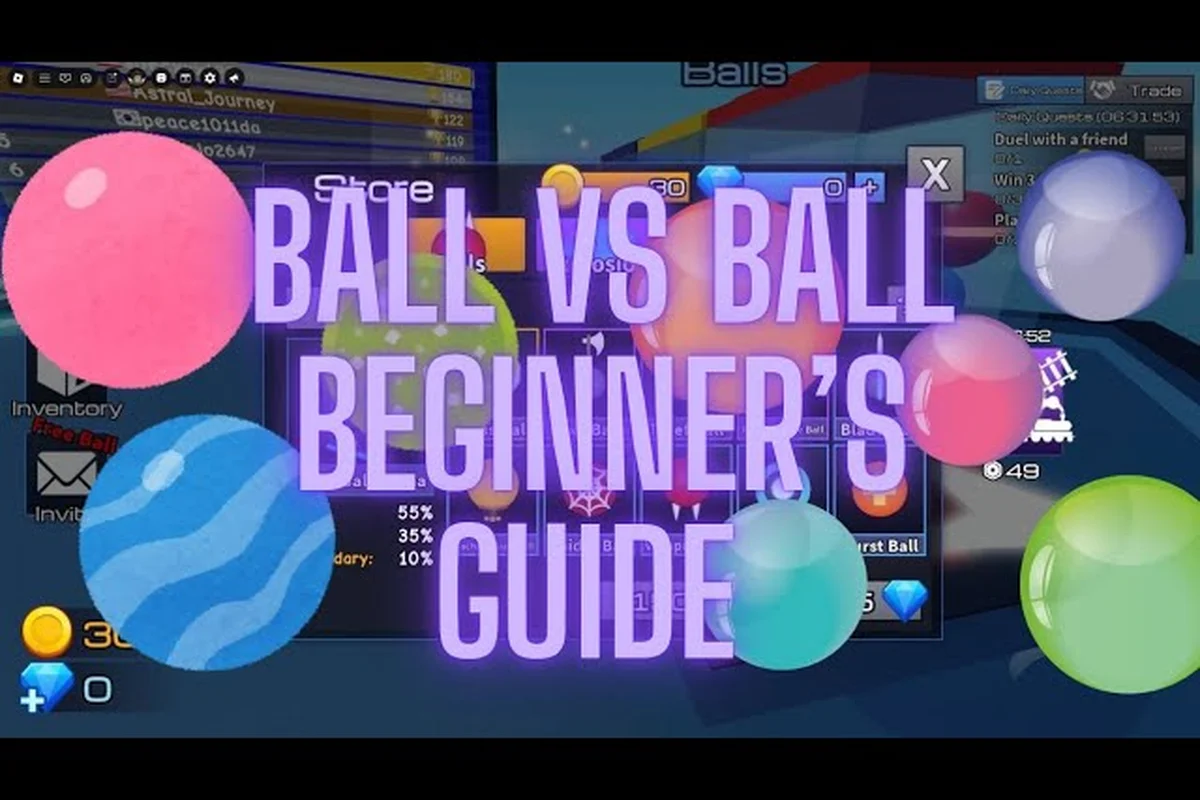
Ball VS Ball drops new players straight into the arena, and the first few matches can feel confusing when balls appear at random and the reroll button is flashing. This Ball VS Ball beginner guide breaks down the core loop, the controls that actually matter, and the simple habits that turn chaotic early rounds into steady coin income. According to the official Ball VS Ball page on Roblox, every match follows the same skeleton: enter, pick a ball, fight, reroll when you need to, and bank the coins from your wins. Once that rhythm clicks, the rest of the game opens up.
The arena is small, the rounds are short, and the skill ceiling is mostly about knowing when to reroll and when to commit. That is good news for anyone starting from zero, because the early-game tools you need are already in the first match. Community creators like CHALLS and Clout Brothers both frame the game around the same trio of beginner questions: how matches work, how coins flow, and what to actually buy in the shop. This guide answers all three.
Understanding the Core Match Loop
Every Ball VS Ball match runs on the same five-step loop: enter the arena, receive a random ball, fight other players, reroll your ball when the roll is bad, and collect coins from your wins. The loop is short on purpose, which is why matches feel like quick bursts instead of long sessions. Once you internalize that loop, the rest of the game stops feeling random and starts feeling like a series of small decisions stacked on top of each other.
What Happens When You Join a Match
The moment you load into an arena, the game gives you a random ball from its current pool. Your ball defines your attacks, your movement quirks, and the small visual identity other players see. Because the ball is assigned rather than chosen, your first job in any round is to read what you got and decide whether to keep it or reroll. Community walkthroughs consistently describe this as the most important decision of the round, because every later choice depends on which ball you are actually playing.
Balls are sorted into families such as Ball, Explosion, and Flyer, and each family tends to specialize in a different combat style. The shop's daily stock mirrors that structure, so recognizing the family early helps you plan your rerolls and your future purchases around it.
How Wins Translate Into Coins
Coins are the only currency the game uses for new balls, and they are earned by winning battles inside the arena. According to the official description, the coin payout is tied directly to the outcome of your fights, which means the fastest way to grow your collection is to win more rounds rather than to grind longer ones. That detail changes how beginners should think about the early game: instead of stretching every match out, you want clean wins that bank coins quickly so you can start shopping.
| Match Outcome | Coin Effect | Beginner Takeaway |
|---|---|---|
| Win a battle | Adds coins to your total | Best path to a bigger ball pool |
| Lose a battle | No coin payout for that round | Reroll sooner next time if you are at a disadvantage |
| Mid-battle reroll | Costs nothing but uses up time | Only worth it when your current ball is clearly outmatched |
| Survive to end of round | No extra bonus beyond battle wins | Position and timing matter more than hiding |
Why the Reroll Button Matters
The reroll is the safety valve built into every match, and beginners who ignore it tend to lose rounds they could have salvaged. If your starting ball is small, slow, or weak against the family the lobby is using, a quick reroll can flip the round. The button does not refund your original ball, so the skill is in reading the lobby fast and rerolling only when the new option is clearly better. As you get more familiar with the families, the reroll window gets shorter, and your matches become more efficient.
Reading the Arena and the Ball Families
The arena is a small enclosed space with very little cover, which is why knowing your ball's range and speed matters more than memorizing the map. Ball VS Ball uses three primary families, and each one rewards a different kind of positioning. Beginners who learn the families before they start shopping tend to build collections that cover each other's weaknesses instead of stacking the same role five times.
| Family | Combat Style | Strength | Weakness |
|---|---|---|---|
| Ball | Standard melee brawler | Balanced stats, easy to learn | Outranged by flyers, out-burst by explosions |
| Explosion | Burst damage on contact | Wins trades quickly, strong in crowds | Risky to commit, can be dodged |
| Flyer | Mobile ranged pressure | Hard to pin down, controls space | Fragile if caught, harder to aim at first |
How the Family Matchup Works
Matchups in Ball VS Ball are not strictly rock-paper-scissors, but each family has a tendency that beginners can rely on. A brawler Ball can pressure a Flyer if it gets close, an Explosion ball punishes grouped-up brawlers, and a Flyer can keep a slow Explosion ball from ever landing a hit. Reading the lobby early, before you commit to your first ball, is the easiest way to get a free advantage in the first ten seconds of a match.
How Tier Rarity Fits In
The shop sells balls at Rare, Epic, and Legendary tiers, and the tier mostly affects how much raw power the ball brings into a round. Beginners do not need Legendary balls to win early matches, and community guides note that a well-played Rare often outperforms a Legendary that is unfamiliar. The right way to read rarity is as a stat budget: higher tiers give you more to work with, but the family and your own comfort with that ball are still the deciding factors.
Controls, Movement, and Combat Basics
Ball VS Ball is built on a tight control set, which is one reason it works well as a first arena game. The default bindings put movement, attacks, and the reroll button right next to each other, so you do not have to learn a long list of keybinds before you can play. The skill curve shows up not in the number of buttons, but in how you chain them together inside a short round.
| Action | Default Binding | When to Use It |
|---|---|---|
| Move | WASD or left stick | Reposition between fights, chase low-HP enemies |
| Attack | Left click or main trigger | Commit to trades, finish off weakened opponents |
| Reroll | Dedicated reroll key | Only when your current ball is clearly outclassed |
| Camera | Mouse or right stick | Track fast Flyers, scout the rest of the lobby |
Positioning More Than Aim
Because the arena is small and the rounds are short, positioning matters more than precise aiming. Beginners who try to land perfect shots often end up standing still in the open, where any Explosion ball can punish them. The cleaner habit is to keep moving, use the edges of the arena to limit the angles enemies can take, and only commit to an attack when you have a safe exit path. That single shift in mindset is what most community guides point to when they describe the difference between losing early matches and winning them.
When to Reroll and When to Stay
The reroll button is one of the few mechanics that can feel wasteful if you mash it, so the rule of thumb is to reroll only when your ball is clearly mismatched against the lobby. If two of the three other players are running Flyers and you spawned a slow Ball, rerolling early can give you a fighting chance. If the lobby is mixed and your ball is usable, staying put and playing smart is almost always the better call. Holding a mediocre ball while you learn positioning is faster progress than burning rerolls on every round.
Building Your First Coin Income and Shop Plan
Coins are the bridge between matches and progression, so a sensible early-game plan is more valuable than chasing one big win. The shop rotates stock daily across the Ball, Explosion, and Flyer families at Rare, Epic, and Legendary tiers, and that rotation is where most of your decisions will land. Beginners who treat the shop as a planning tool rather than a wishlist tend to grow their collections faster.
A Simple Early-Game Coin Plan
The fastest way to build a coin base in Ball VS Ball is to stack short winning streaks rather than chase a single high-payout round. Winning two or three battles in a row usually banks more coins than surviving a long round and losing the final trade, because the payout is tied to the battle outcomes. That is also why a lot of community guides, including the walkthroughs on VendoPlus' onboarding walkthrough, frame the early game around winning clean rather than surviving long.
| Day | Goal | Shop Focus |
|---|---|---|
| Day 1 | Land your first 3-5 wins, learn reroll timing | Buy one Rare Ball you enjoy playing |
| Day 2-3 | Stabilize coin income, try a second family | Add a Rare Explosion or Rare Flyer |
| Day 4-5 | Push for a tier upgrade on your main ball | Save coins for an Epic version of your best family |
| Day 6-7 | Cover matchup weaknesses, prepare for Legendary | Pick a Legendary only when the daily stock matches your plan |
How to Read Daily Shop Stock
Daily stock in Ball VS Ball rotates through the families, and the smart move is to plan around the stock instead of forcing a buy. If the day's rotation leans into Flyers and you already have a strong Ball main, that is a good day to grab a Rare Flyer and round out your matchup coverage. If the rotation is mostly Explosion balls, save your coins and wait for a stock that matches your plan. Community creators tend to recommend this exact pattern because it keeps your coin balance from bleeding into off-plan purchases.
Why the Group Reward Is Worth Claiming
The official game description points players toward the developer group as a free reward path, and the ATYS 3 group on Roblox is the practical way to claim it. Joining the group is a one-time step, and the description explicitly names it as the free-reward route rather than a redeem-code system. For beginners trying to stretch their first coin pile, that single action is one of the easiest early gains in the game.
Common First-Match Mistakes and How to Avoid Them
Most beginners lose their first few rounds for the same handful of reasons, and the good news is that every one of them is fixable without any extra coins. Spotting these patterns early is the fastest way to start winning, because they cover the gap between understanding the controls and actually using them under pressure. A short checklist of habits, applied consistently, will outperform any single trick.
Mistake 1: Standing Still to Aim
Standing still is the most common early-game mistake, because new players instinctively want to line up a clean hit. The arena is small enough that a stationary target is easy prey for any Explosion ball in the lobby. The fix is to keep your feet moving, even while attacking, so opponents have to track you instead of just clicking on you. Once you build that habit, the same aiming skill that felt useless starts landing clean hits because your targets cannot freeze either.
Mistake 2: Rerolling Too Often
The reroll button is tempting, but it is also the easiest way to throw away a usable ball. Each reroll costs you time, and the new ball is just as likely to be awkward as your current one. A simple rule is to reroll only if your ball is clearly outmatched by two or more opponents, and to commit to your roll for the rest of the round otherwise. That single habit keeps your matches focused and your coin income steady.
Mistake 3: Ignoring Family Matchups
Many beginners pick balls based on rarity or color and then wonder why they lose to every Flyer in the lobby. The fix is to glance at the other players' balls in the first few seconds of a round and decide whether your roll is in a good spot. If the lobby is full of a family that hard-counters yours, reroll. If the matchup is even, commit. Reading the lobby in those first seconds is a habit that pays off in every single match.
Mistake 4: Skipping the Shop Plan
Walking into the shop without a plan is the early-game equivalent of feeding coins into a slot machine. Without a target family and tier, beginners tend to buy whatever is shiny and end up with a collection that does not cover their weaknesses. The fix is to pick one main family to specialize in early, then use the next few days of stock to round it out with a single counter-family ball.
Mistake 5: Playing Alone With No Reference Points
Ball VS Ball is built around short rounds, which makes it easy to play without thinking about how you actually improved. Beginners who want to climb faster should pick a small set of reference points, like number of wins per session or coins banked per day, and check them honestly. That habit turns the game into a measurable skill curve instead of a streak of random rounds.
Frequently Asked Questions
How do I start playing Ball VS Ball as a total beginner?
Load into the game, read the official description, and run a few unranked matches to learn the controls. Focus on the five-step loop: enter, pick a ball, fight, reroll when needed, and bank coins from wins. Once that rhythm feels natural, start planning your first shop purchase.
What is the best way to earn coins quickly in Ball VS Ball?
Stack short winning streaks instead of trying to survive long rounds, because coin payouts are tied to the battles you win rather than the time you stay alive. Joining the developer group is also a one-time free reward that costs nothing, which is a small but easy early boost.
Which ball family should beginners buy first?
A Rare Ball is usually the safest first pick, because the family is balanced and easy to learn, and a Rare version is affordable while you are still building your coin base. After that, add a single counter-family ball like a Rare Explosion or Rare Flyer to cover obvious matchup gaps.
When should I reroll my ball in a match?
Reroll only when your starting ball is clearly outmatched by the rest of the lobby, such as a slow Ball in a room full of Flyers. If the matchup is roughly even, commit to your ball for the round and focus on positioning instead of burning the reroll window.
Is Ball VS Ball good for playing with friends?
Yes, the rounds are short enough that private matches and small group lobbies work well, and a coordinated team can cover each family's weaknesses by stacking roles. For deeper combat habits, the combat guide covers team strategies and private server tips in more detail.