
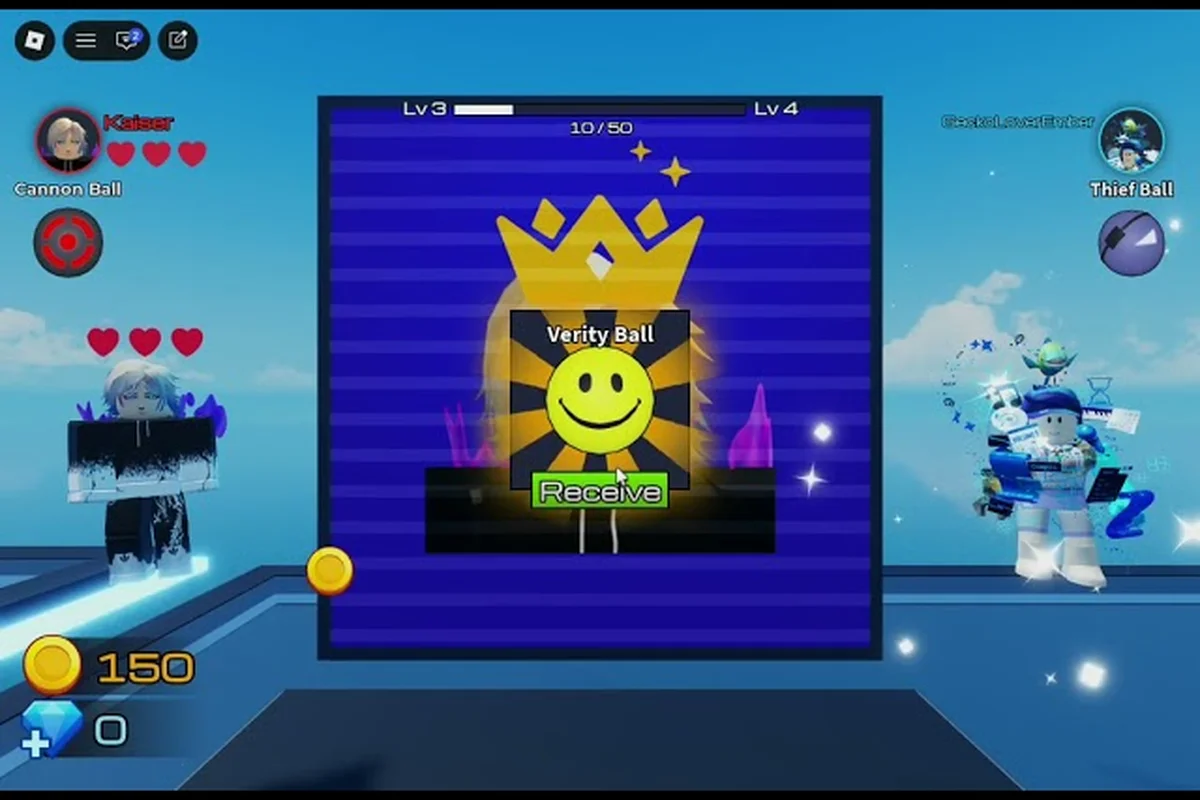
Drop into the arena with a solid plan and your first dozen matches in Ball VS Ball stop feeling random. The Roblox brawler hands you a randomly rolled ball, drops you into a free-for-all, and asks you to either outplay your current sphere or reroll for a better one mid-fight. Coins from wins unlock the shop, the shop unlocks stronger balls, and stronger balls unlock the part of the game where you actually start climbing. This Ball VS Ball new player guide lays out the first moves, the controls worth memorizing, the beginner mistakes that quietly bleed your coin balance, and the early-game habits that separate players who plateau from players who keep improving.
What Ball VS Ball Actually Is and Why a New Player Guide Helps
Ball VS Ball is a Roblox arena brawler developed by the group ATYS 3, where every player enters the map with a randomly assigned ball, fights other players using that ball's kit, and rerolls the ball mid-battle when the roll is bad. The win condition is straightforward: outlast and out-damage the other players in your lobby. According to the official game page, the core loop is "take whichever random ball the game offers, spend a reroll mid-battle when that draw is bad, turn wins into coins, then buy fresh entries from the shop until your collection is complete."
That description sounds simple, but the first hour is where most players fumble. The reroll button tempts you to chase a perfect roll instead of learning the ball you already have. The shop distracts you with Legendary-tier balls you cannot afford yet. The lobby drops you in next to players who have been grinding for weeks, and the sudden power gap feels unfair. A solid new player approach fixes all of that by giving you a small, repeatable routine: learn two or three balls properly, reroll with intent instead of panic, spend coins on the right shop slots, and measure progress match by match.
The first game experience in Ball VS Ball is short, which is actually a strength for new players. Each match lasts only a few minutes, so you can fail, queue again, and apply one new habit in the next round without losing a huge time investment. That loop is also why a written guide helps more than a video: a written plan is easier to revisit between matches than rewinding a 12-minute walkthrough. If you want a deeper mechanics walkthrough after this one, the ball vs ball beginner guide expands on ball families, reroll logic, and shop priorities in more detail.
The Core Loop in Plain Language
Every Ball VS Ball match runs through the same four phases, and recognizing them is half the battle.
| Phase | What Happens | What You Should Do |
|---|---|---|
| Roll | Game picks a ball for you at match start | Check the ball's family, primary ability, and range before moving |
| Fight | Free-for-all against other players | Use terrain, time your abilities, and track cooldowns |
| Reroll | You can swap balls mid-battle for free | Reroll only when your current ball is countered, not on a whim |
| Reward | Winning matches drops coins | Spend coins in the shop, not on rerolls or cosmetics you do not need |
What "New Player" Means in This Game
A new player in Ball VS Ball is anyone in their first 50 matches, or anyone whose coin balance is still under 5,000. At that point the entire ball roster is locked behind shop tiers you cannot yet afford, your reroll instinct is sloppy, and you have not yet built a personal "main ball" you can fall back on when a lobby tilts against you. Once you cross 5,000 coins and own at least three Rare-tier balls from the daily shop, you have officially left the new-player bracket and entered early-game territory.
First Steps in Your First Match: Controls, Camera, and Movement
The control scheme in Ball VS Ball is the same Roblox template most brawlers use, which means new players who already play any other Roblox fighting game have a head start. The actual layout, though, still has small traps: holding W into a fight you cannot win, forgetting the camera lock, and walking off the arena edge because you were watching the kill feed instead of the floor. Locking down the controls before worrying about ball picks or shop strategy is the fastest way to stop bleeding early losses.
The Controls That Actually Matter
| Control | Action | New Player Mistake |
|---|---|---|
| WASD | Move your ball around the arena | Running in straight lines with no terrain cover |
| Mouse | Aim your primary attack | Looking at the ground instead of the enemy ball |
| Left Click | Fire primary ability | Holding left click and burning through stamina |
| Space | Use the secondary ability or jump | Mashing space to "dodge" when there is no dodge mechanic |
| Shift | Reroll your current ball | Rerolling on cooldown because the first ball felt weak |
| Tab | Open the scoreboard and ball info | Ignoring it and never learning enemy ball cooldowns |
The five controls that decide your first match are movement, aim, primary fire, secondary ability, and reroll. The scoreboard is a hidden sixth, because checking the enemy ball list once at the start of the match tells you which opponents to avoid and which ones your current ball can actually beat.
Camera and Positioning Habits
The default camera in Ball VS Ball is a third-person follow cam, and the temptation is to zoom all the way out so you can see the whole arena. Resist that urge. Zooming out makes enemy balls look like dots, and tiny dots are hard to lead with a primary attack. Pull the camera in just enough to read the enemy's animation wind-up, then strafe side to side so you are not a stationary target.
Positioning matters more than aim in early matches. The arena has elevation changes, tight corridors, and wide-open center zones. The wide-open center is where experienced players camp because their balls reward long sightlines. New players should hug edges, use the corridors as chokepoints, and only step into open ground when they are chasing a kill or fleeing a losing fight. The ball-vs-ball beginner mistakes list almost always starts with "stood in the middle of the arena and got collapsed on by two enemies at once."
The Balls You Will See First and How to Use Them
Balls in Ball VS Ball are sorted into families, and each family has a different combat identity. The shop's daily stock rotates through Ball, Explosion, and Flyer families at Rare, Epic, and Legendary tiers, and the first ball you roll in any match comes from the same pool. Learning the family identity before learning individual ball names is the shortcut new players rarely take, and it is the shortcut that unlocks the rest of the game.
Ball Family Comparison
| Family | Combat Identity | Range | Best Against | Weak Against |
|---|---|---|---|---|
| Ball | Brawler, close-range brawler with fast swings | Short | Other close-range balls | Flyer, ranged poke |
| Explosion | Area-of-effect burst damage | Medium | Clustered enemies, Ball family | Flyer, kiting enemies |
| Flyer | Mobile, ranged poke, high uptime | Long | Static targets, low-HP balls | Explosion burst if caught |
The table above is a generalization. Individual balls within each family still differ on cooldown, damage, and mobility, but if you learn the family identity first, you can read a roll in under two seconds: see Explosion, look for clumps; see Flyer, hold high ground; see Ball, close the gap and trade hits.
How to Read a Roll in the First Three Seconds
When the match loads and the game assigns you a ball, you have roughly three seconds before the fighting starts. Use that window to check three things: the ball's name, its family icon, and the enemy list. If your ball is a Ball-family brawler and the lobby has three Flyers, the match will be a steep uphill fight, and you should consider an early Shift reroll if you have a Legendary or Epic in the queue. If your ball is a Flyer and the lobby is mostly Ball-family, you are in a winning position and should not reroll away the advantage.
That three-second read is the single biggest skill that separates a new player from a mid-tier player. New players stare at their own ball's animation for the whole three seconds and miss the enemy composition. Mid-tier players scan the lobby, match their ball against the enemy list, and decide whether to fight or reroll before the first hit lands.
Reroll Logic, Coin Economy, and Shop Priorities
The reroll button is the most overused feature among new players and the most underused feature among veterans. New players spam Shift whenever they lose a single fight, which means they burn their ball's natural advantage and end up rolling into a worse matchup. Veterans reroll only when their current ball is hard-countered by the lobby, and they spend the rest of the match learning how to win with what they have. That single habit shift is the difference between players who climb and players who stay stuck.
Deciding Whether to Keep Your Draw
| Situation | Reroll? | Why |
|---|---|---|
| Your ball is hard-countered by 3+ enemies | Yes | Matchup is unwinnable without a swap |
| You lost one fight to a single enemy | No | One loss is not a counter, it is a positioning error |
| Your ball's primary is on long cooldown | No | Cooldowns reset, reroll does not fix timing |
| You rolled a Rare and the lobby is full of Commons | No | You are already favored, do not reroll away the edge |
| You rolled a Common and the lobby has 2+ Legendaries | Yes | Stat gap is too large to outplay without a swap |
Coin Economy for New Players
Coins in Ball VS Ball come from winning matches, with bigger payouts for longer survive times and higher placements. According to the official page, the loop is "turn your wins into coins, then buy fresh entries from the shop until your collection is complete." The key word is wins, not participation. A player who finishes third in every match earns less per hour than a player who wins one in three but earns the full reward on the wins.
| Match Placement | Approx. Coin Reward | Notes |
|---|---|---|
| 1st | Highest payout | Full win bonus plus survival bonus |
| 2nd | Mid payout | Survival bonus, no win bonus |
| 3rd | Lower payout | Short survival window, partial reward |
| 4th+ | Smallest payout | Often below 100 coins, not worth grinding |
The shop is where the coin economy actually matters. The daily stock rotates through Rare, Epic, and Legendary balls across the three families, and the smart move is to save coins for two or three daily rotations instead of panic-buying the first Rare you see. A new player who spends 800 coins on three random Rares will have a worse roster two days later than a new player who saved 2,400 coins and bought one Epic with intent. For a full breakdown of ball prices, drop rates, and which family to prioritize first, the ball vs ball how to unlock balls guide covers the shop math in more depth than this first-game guide can fit.
Beginner Mistakes That Quietly Bleed Your Coin Balance
Most new players do not lose because the game is unfair. They lose because they make the same five mistakes in every match, and the mistakes compound into a coin balance that refuses to grow. The list below is ranked by how much each mistake costs you, not by how common it is.
The Five Mistakes in Order of Cost
-
Rerolling on tilt. Spamming Shift after a single lost fight burns the ball's natural matchup advantage and rolls you into a worse spot. Cost: lost matches, lost coins, lost learning reps with the ball you already had.
-
Standing in the open center. The center of the arena is where ranged and AoE balls camp. New players walk into the middle to "find a fight" and get collapsed on by two or three enemies at once. Cost: instant death, zero coin gain, no learning.
-
Spending coins on the first shop ball you see. The daily shop rotates, and panic-buying a Rare you do not need leaves you short when an Epic you actually want appears the next day. Cost: a worse roster two days from now.
-
Ignoring the scoreboard. Not pressing Tab at the start of a match means you do not know which enemy balls counter you. Cost: walking into a losing matchup with full information available.
-
Chasing kills instead of playing for placement. Ball VS Ball rewards placement, not kill count. A player who finishes first with two kills earns more than a player who finishes fourth with six kills. Cost: lower coin payout per hour.
The single most expensive mistake is rerolling on tilt, because it triggers the other four. A tilted player who rerolls into a worse ball stands in the open to find a fight, ignores the scoreboard, chases the kill that "should have been" theirs, and ends the match in fourth place wondering why the coin payout was so small. Fix the reroll habit and the other four mistakes get easier to fix automatically.
How to Break the Tilt Cycle
The simplest break is a one-match cooldown. After a loss where you felt you were cheated by the reroll or the matchup, queue once with the explicit goal of finishing in the top three, not winning. That single placement-focused match resets your mental clock and stops the reroll-on-tilt habit from running for the rest of your session. Community players report that the one-match cooldown works far better than taking a full break, because the next match is usually a better roll anyway.
Early Habits That Build a Real Pro Game
The jump from new player to early-game regular in Ball VS Ball is not a secret mechanic or a hidden shop exploit. It is a small set of habits that compound over a week of play. None of them are flashy, and none of them will show up in a highlight reel, which is exactly why most players skip them.
The Five Habits Worth Building Now
| Habit | What It Looks Like in Match | Why It Compounds |
|---|---|---|
| Check the scoreboard on match start | One Tab press, scan enemy balls, decide to fight or reroll | Stops you from walking into hard counters |
| Pick one ball to main this week | Same ball in every match, learn its cooldowns by feel | Builds muscle memory faster than rotating balls daily |
| Save coins for two daily rotations | Skip panic buys, hold for an Epic or Legendary drop | A better roster in 48 hours, not a worse one |
| Play for placement over kills | Win 1 in 3 with two kills beats losing with six kills | Coin income scales, unlocks arrive faster |
| Review one lost match per session | Pick the worst loss, identify the mistake, fix it next match | One fix per session is a 1% daily improvement |
Climbing Out of the New Player Bracket
The new player bracket, defined here as the first 50 matches or the first 5,000 coins earned, has a clear exit. By the time you have one main ball you can play without thinking about cooldowns, three Rare-tier balls in your collection, and a coin balance that survives two daily rotations without panic-buying, you are no longer a new player. You are an early-game regular, and the next step is the same habits pointed at harder problems: learning to read enemy ball swaps mid-fight, learning when to push a wounded enemy versus when to back off, and learning the map layouts well enough to use terrain without looking.
The reason this works is that Ball VS Ball rewards pattern recognition more than raw mechanical skill. A player who can predict which ball the enemy is about to swap to has a bigger edge than a player with faster reflexes but worse prediction. The habits above all feed pattern recognition: the scoreboard check feeds matchup prediction, the main ball feeds cooldown prediction, the saved coins feed roster prediction, the placement play feeds lobby prediction, and the post-match review feeds your own prediction of your own mistakes. If you want the next layer of that climb, the ball vs ball advanced guide picks up exactly where this guide leaves off.
Frequently Asked Questions
How do I play Ball VS Ball as a complete beginner?
Spawn into the arena, let the game assign you a random ball, and spend the first three seconds checking the scoreboard to see what your enemies rolled. Fight using your ball's primary and secondary abilities, use Shift to reroll only when your ball is hard-countered by the lobby, and play for placement rather than kill count so you earn the full coin payout on wins.
What is the fastest way to earn coins in Ball VS Ball?
Winning matches is the stated source of coins, and finishing first pays the most. The fastest way to climb coin income is to play for placement: survive longer, avoid the open arena center, and only push fights when your ball has a matchup advantage. Saving coins for two daily shop rotations also means your roster improves faster, which in turn means more wins and more coins.
What are the most common beginner mistakes in Ball VS Ball?
The five most expensive beginner mistakes are rerolling on tilt after a single loss, standing in the open arena center, spending coins on the first shop ball you see, ignoring the scoreboard at match start, and chasing kills instead of playing for placement. The single most expensive is rerolling on tilt, because it triggers the other four in a loop.
How long does it take to stop being a new player in Ball VS Ball?
Most players leave the new player bracket after about 50 matches or once their coin balance crosses 5,000. At that point you should have one main ball you can play without checking cooldowns, at least three Rare-tier balls in your collection, and the habit of saving coins for two daily rotations instead of panic-buying.
Is there a difference between the ball vs ball beginner guide and the pro guide?
Yes, the beginner guide covers the first 50 matches, the controls, the three ball families, and the coin economy basics. The pro guide covers mid-fight ball swaps, advanced positioning, map-specific rotations, and the habits that take you from early-game regular to top of the leaderboard.