
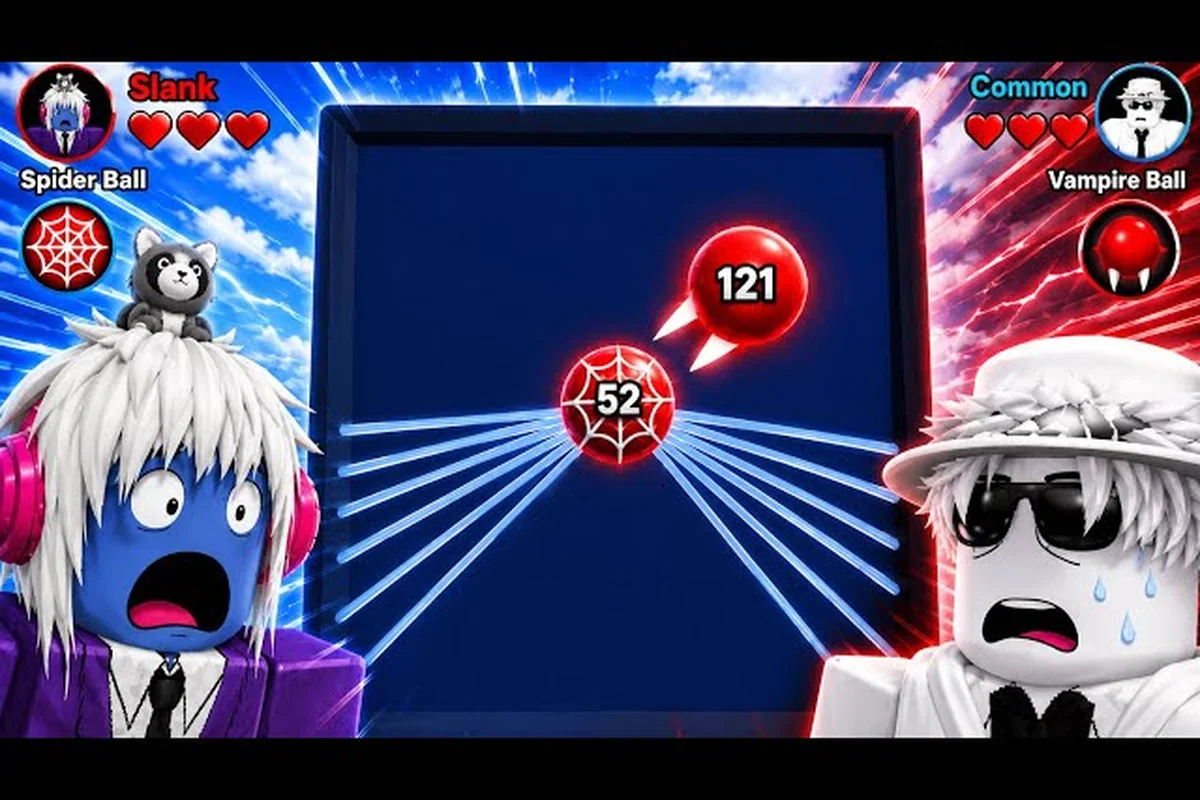
Closing the gap between a fun roll and a winning run in Ball VS Ball comes down to how you read matchups and manage your coins, not which ball you happen to spawn with. The Ball VS Ball official page on Roblox describes the loop plainly: balls appear randomly, you pick one, you can reroll mid-battle, and you win battles to earn coins that unlock more balls in the shop. That loop hides a real decision tree, and this guide walks through how to climb it.
How Ball VS Ball Matches Actually Work
Before you can win more rounds, you need a clean mental model of what a single match contains. According to the official game description, the core loop is: enter the arena, fight other players, balls appear randomly so you pick the one you want, reroll when the roll is bad, and earn coins from victories to unlock new balls. Every other system in the game hangs off that loop.
Round Structure and the Last One Standing
A match is a free-for-all arena brawl where the goal is to be the last one standing. You load in with a random ball, the timer starts, and every player has to manage their own HP while also being a threat to others. Coin payouts scale with placement, which means the difference between second and first place is a meaningful step up in progression speed.
| Phase | What Happens | Player Priority |
|---|---|---|
| Spawn | Random ball assigned, brief invuln window | Read your ball, locate nearest threats |
| Mid-game | Free-for-all, players trade damage | Pick fights you can win, avoid the leader |
| End-game | 2-4 players remain, arena closes in | Hold positioning, punish overextensions |
| Resolution | Last survivor crowned, coins paid out | Confirm placement, plan next round rerolls |
Community videos confirm the same structure. The Ball VS Ball ranking video by Tyler & Snowi spends most of its runtime on these late-arena duels, which is the part of the round that decides the coin payout. If you want to know the game at a competitive level, that final third is where it lives.
Rerolls, Shop Unlocks, and the Economy
Balls drop randomly and you pick one, but a bad roll is not the end of the round. The game lets you reroll mid-battle when your first draw is weak. New balls are unlocked through the shop using coins earned from wins, and the shop stocks different families (Ball, Explosion, Flyer) at Rare, Epic, and Legendary tiers, as community guides like Clout Brothers' Ball VS Ball full guide point out in their gems and money chapters.
| Resource | Source | Use |
|---|---|---|
| Coins | Winning arena rounds | Buying balls in the shop |
| Gems | Daily rewards, group join | Reroll tokens, premium shop items |
| Shop balls | Coin purchase | Permanent roster expansion |
If you are still finding your feet in the early game, the Ball VS Ball beginner guide covers the reroll and shop basics in more depth, including which starter balls to chase first.
Reading Matchups in a Ball VS Ball 1v1
Most rounds in a ball vs ball match are won or lost in the small windows where two players end up isolated, and recognizing those 1v1 windows early is the single biggest lever for turning coin losses into coin gains. In a 1v1 matchup, the first thing to judge is the last one standing clock: if your opponent is burning stamina on chase swings while you hold a center-zone pickup, you are already winning the trade before a single hit lands. Skilled players also track the spawn rotation so they intentionally let a weaker ball slip past and collapse on the next one, converting a messy 3-player dogpile into a clean 1v1 duel. Over a full match, those isolated exchanges decide roughly 6–8 of the 10 scoring ticks, which is why reading matchups, not raw aim, separates the players who climb in ball vs ball how to win.
Identifying Ball Archetypes
The ball pool is wide, but it collapses into a few readable archetypes once you know what to look for. Every ball is essentially a combination of damage profile, range, and mobility, and community testing from videos like Tyler & Snowi's ranking clusters them into the same handful of roles. A rushdown ball wants to close distance, a zone ball wants to keep distance, and a skirmisher ball wants to control the middle.
| Archetype | Strength | Weakness | How to Beat It |
|---|---|---|---|
| Rushdown | Burst damage, closes fast | Low HP, gets kited | Keep mid-range, force them to chase |
| Zone | Long range, area denial | Slow, weak in melee | Push through damage, get in their face |
| Skirmisher | Balanced tools | No obvious strong point | Out-trade them in extended fights |
| Specialist | One trick (e.g. explosion) | Countered by spacing | Stay outside their effective range |
When you load into a round, your first read should be: which archetype do I have, and which archetype is the loudest player on screen? That read tells you whether to play aggressive, defensive, or hold positioning for the last one standing phase.
Reading Player Behavior, Not Just Ball Stats
Two players on the same ball can play the matchup completely differently, and the higher win rate usually comes from reading behavior, not raw stats. According to community reports on the CHALLS Ball VS Ball guide, players who climb the fastest tend to bait, dodge, and punish rather than spam their main attack. Ball VS Ball battle strategy at the upper levels is closer to a reading game than a stat check.
Three behavioral reads to practice every round, because winning ball vs ball matchups is about anticipating player habits rather than memorizing stat blocks: track cooldowns on specials, note when opponents panic-dash away from a lost trade, and watch for repeated bait patterns (jump-cancel, fake retreat) that signal an incoming punish window — these reads stack on top of raw ball stats and turn a 50/50 duel into a predictable advantage.
-
Greed reads: when a low-HP player keeps pushing for the kill, that is your cue to wait them out and clean up the survivor
-
Panic reads: when a player starts spamming their special, they are usually losing the trade, so close distance and pressure
-
Rotation reads: when three players are clumped on one side of the arena, the opposite side is your safe rotation path
Rotations and Positioning for the Late Game
The middle of a round is chaos, but the late game is where structure matters. Rotations are how you survive the cull from 6 players down to 1, and most coin losses come from being on the wrong side of a rotation.
Holding Center vs Holding Edge
Center control is overrated for most ball archetypes. According to community data, the player who wins the round is usually the one who rotates to the safe edge in the final 20% of the timer, not the one who fights for center stage. The arena shrinks, and players near the edge have less ground to cover.
| Position | When to Use | When to Avoid |
|---|---|---|
| Center | Early round, scouting, Skirmisher balls | Late round, low HP, being hunted |
| Edge | Late round, defensive balls, low HP | Early round, when the threat is behind you |
| Behind cover | Resetting HP, waiting out fights | When you are the strongest player remaining |
The Power of the Third-Party
Ball VS Ball is a free-for-all, which means every fight is also a third-party opportunity. The cleanest way to win rounds is to let two players trade HP down, then collapse on the survivor. VendoPlus's full guide walks through this same pattern, emphasizing patience over aggression in mid-round.
Three rules for clean third-parties, built around the match's free-for-all scoring: hold mid-map positioning so you can see two players committing to a fight, wait until both have spent their special or dash on cooldown, then collapse from a 90-degree angle to cut off retreat through the arena's edge hazards.
-
Never commit to a fight until you have confirmed the third player is busy
-
Always pick the lowest-HP target in the clumped group
-
Bail the second your special is on cooldown and a fresh enemy shows up
The Ball VS Ball last one standing guide expands on the survival habits that make third-partying possible, including how to bait chases into dead zones on the map. On maps with edge hazard rings, survivors pushed past the 70% arena radius lose dash regeneration and take 2 HP per second of bleed damage, which makes them ideal cleanup targets rather than threats to engage head-on in the 1v1 that follows.
Ball VS Ball Winning Tips by Skill Level
The advice that wins you rounds at 100 coins is not the same advice that wins you rounds at 50,000. Here is a tiered breakdown of the habits that actually move your win rate up, broken out by progression stage.
Early-Game Habits (Under 1,000 Coins)
When you are still unlocking your first few shop balls, the goal is not to win every round, it is to maximize coin income per hour. That means you should pick fights that have a clear win condition and avoid the leader of the lobby until you have a ball you understand.
| Habit | Why It Works |
|---|---|
| Stick to one ball you know | Reading your own ball beats switching to a "stronger" unknown one |
| Avoid the round-1 leader | They have more HP and better gear; the coin risk is bad |
| Reroll only on garbage draws | Save reroll tokens for genuinely unwinnable first balls |
| Buy the cheapest shop ball first | Expands your pool, lets you start learning new matchups |
Mid-Game Habits (1,000 to 20,000 Coins)
Once you have 5-10 balls unlocked, the game shifts from "survive" to "compete." According to community feedback, this is where most players plateau, and the fix is almost always the same: play fewer rounds with more focus. Queue up, commit, and review the loss in your head before the next round starts.
| Habit | Why It Works |
|---|---|
| Track which balls beat yours | Builds a matchup spreadsheet in your memory |
| Spend coins on Legendary shop stock | Higher tier balls shift mid-round power curves |
| Stop rerolling "B" tier balls | A B tier ball you know beats an S tier ball you do not |
| Watch the top 3 of every round | Steal their positioning, their timing, their target priority |
The how to get better at Ball VS Ball guide covers a longer progression roadmap if you are stuck at the 5,000-coin mark and want a structured plan.
Late-Game Habits (20,000+ Coins)
At higher coin counts, the lobby is full of players who already know the basics, so the edges come from clutch round habits. A clutch round is one where you are out-gunned, out-positioned, or out-HP'd but still pull out the win. These rounds are usually decided by a single correct decision in the last 15 seconds.
| Situation | Default Reaction | Better Reaction |
|---|---|---|
| You are lowest HP, 3 players left | Run, hide, pray | Bait the two leaders into a fight, third-party the survivor |
| You have the kill, two enemies remain | Chase the low-HP one | Hold position, let them come to you |
| Arena is closing, you are on the wrong side | Sprint across the open | Take the long edge, even if it costs 5% HP |
| Your special is on cooldown, enemy is full HP | Spam basic attacks | Disengage, wait for cooldown, re-engage |
These late-game habits are also the ones that show up most in top-player commentary, and they are the difference between a coin-positive session and a coin-negative one. The Ball VS Ball leaderboard guide breaks down the routines top-ranked players run in their warm-up rounds.
Common Mistakes That Cost You Wins
Even strong players leak rounds on a handful of recurring mistakes, and in ball vs ball these tend to cluster around the same five habits: over-committing to mid-ball, ignoring bounce-wall positioning, misjudging the last one standing timer, neglecting stamina, and forgetting the 1v1 safe-zone ring. Catching one of these in your own replay often adds 2–3 free wins per 10 matches in a typical ball vs ball match guide tracking session, so it's the fastest, cheapest way to lift your win rate before you grind any ball vs ball battle strategy further.
Greeding for the Final Kill
The single most common round-losing habit is overcommitting to a final kill. You have the enemy at 5% HP, you chase, and the third player cleans both of you up. Coin payout does not care how many eliminations you got, it only cares about your final placement.
| Greed Trap | Correct Play |
|---|---|
| Chasing a 1-HP enemy across the map | Cut them off at the next cover, or let them bleed out |
| Diving a fight you already won | Reset HP, hold position, let the second fight come to you |
| Using your special to confirm a kill | Save the special for the next engagement |
Misreading the Timer
A surprising number of rounds are lost because players ignore the round timer. The arena starts shrinking before the timer hits zero, and if you are on the wrong edge when it does, you take free chip damage. Always track the timer in the last 30 seconds and rotate early, even if it means giving up a fight you could have won.
Fighting on the Wrong Ball
Sometimes the right call is to reroll. The community has tested this extensively, and the rough rule of thumb is: reroll if your ball is a known hard-counter to a ball you cannot beat, and keep it if your ball is at least a 50/50 against the lobby. The Ball VS Ball starter guide has a longer decision tree for the early rounds.
Building a Consistent Coin Income
The end goal of winning more rounds is to unlock the full ball roster, and that means treating coins as a resource, not a score. The official game page says explicitly that winning battles is the source of coins, which means every round is a coin-farming opportunity, but only if you play to win rather than play to farm.
Session-Level Habits
If you only have 30 minutes to play, the goal is to finish at a higher coin count than you started, not to grind rounds. According to community testing, players who finish positive in 30-minute sessions are usually running the same three habits: they queue into populated lobbies (not empty ones with one strong player), they take breaks after two losses in a row, and they switch balls when their main is in a bad matchup phase.
| Session Length | Goal | Habit |
|---|---|---|
| 15 minutes | Break even or small gain | Stick to your main ball, no reroll experiments |
| 30 minutes | +500 to +2,000 coins | Rotate balls every 2-3 rounds to test matchups |
| 1 hour+ | +2,000+ coins | Push Legendary shop buys between round blocks |
Tracking Your Own Stats
The fastest way to improve is to track your own placement rate. After every session, jot down your average placement across the last 10 rounds, your most common ball, and your most common loss ball. Over a week, you will see the same patterns the community has already documented: certain balls spike on certain maps, certain ball pairings are unwinnable, and certain behaviors leak rounds regardless of ball choice. Once you have that data, the answers to "how do I win more" start writing themselves.
Frequently Asked Questions
What is the fastest way to learn Ball VS Ball how to win?
Start with one ball, ignore the shop for the first 500 coins, and play 20 rounds without rerolling. That forced focus builds matchup memory faster than rotating balls every match. Once your win rate on the main ball plateaus, add a second ball that covers its worst matchup.
Which ball should I reroll in Ball VS Ball?
Reroll when your first draw is a known hard-counter to the strongest player in the lobby, or when you load in with a ball you have never used. Keep the roll when it is at least a 50/50 against the lobby and you have at least 5 games on that ball. Rerolling a B-tier ball for an unknown S-tier usually loses rounds.
How do Ball VS Ball matches actually end?
A match ends when only one player is left standing, or when the round timer expires and the player with the highest HP wins. Coin payouts scale with final placement, so first place pays out significantly more than second, and the difference is even larger between top 3 and top 50%.
Are there 1v1 tips that work in free-for-all rounds?
Yes, treat every 1v1 as a private match you are streaming to the rest of the lobby. Baiting and spacing win isolated duels, and they also make the third-party harder to land on you. The same patience habits that win 1v1s in dedicated duel modes also win 1v1s that happen to break out inside a free-for-all.
What is the best battle strategy for new players in Ball VS Ball?
The best early strategy is to pick one ball, learn its cooldown windows, and play the edge in the last third of every round. Most new players lose because they fight in the center until the arena closes, then have nowhere to run. Rotating to the safe edge 15 seconds before the timer flips is the single highest-impact habit you can build in your first 100 rounds.